How trying to understand others can be hugely beneficial – and not just for writers

c4039a1da131ee563ae9c967f4bae268

“As a writer you should not judge. You should understand.”

The other night I came across this quote from Ernest Hemingway. I read it, flicked past it, and then flicked back. I started pondering over it before I pressed ‘Save’. There was so much truth in this, the fact that, as a writer penning a story, anything involving a character, you need to immerse yourself into whoever you are telling the story through. You also need to be able to understand the viewpoint of characters you don’t like or would never agree with in real life, and that is a huge conflict and very difficult. But, as I have learnt and appreciated from many great writers, a villain is only a good and convincing “baddy”, if you get close to them and get an insight into their thinking, even if you detest them and would want to give them a piece of your mind if you could.

It then got me thinking about how useful this ability of being emphatic and understanding is in real life. Many sayings such as “Treat everyone how you would like to be treated yourself”, or “Try walking in someone else’s shoes” advocate that empathy and tolerance are great characteristics to champion. And if we are talking about loved ones and people that are close to us, it’s not so tough. Dare I claim, especially us women are masters of tolerating and understanding. For example, if a friend of mine cancels because she feels overwhelmed and needs some time to herself, then I get that, because we all feel like this sometimes. It resonates. We get it. But what about those (hopefully few) people around us whose only purpose is to make our lives miserable? The nemesis that, for whatever reason, you can’t just dispose of? How can we learn to see things from their point of view, without judging?

My instant reaction was that it would be difficult. If you can’t see eye to eye with someone, how are you supposed to understand their viewpoint? However, I then realised that I had been doing this since I can remember. Trying to see things from anyone’s perspective, even those few I loathe, makes me usually question everything, and I don’t just ignorantly think that my way is the highway. Whereas I feel this is one of my noble attributes, it’s sometimes really not helpful to question yourself when someone else is just being a plain arsehole. It takes a lot of thinking, considering, evaluating and re-thinking, before you then return to your viewpoint and realise that it’s all very well trying to understand someone’s shitty attitude, but that sometimes you just have to move them and their stinkers to the ‘Fuck-it’ bucket.

One of the delightful side effects of immersing yourself into someone else’s way of thinking is the fact that you start turning into an oracle, developing the ability to read people like books, predicting their reactions or actions with quite frightening accuracy. Whilst it is exhausting trying to understand a human dung beetle, what a fantastic way to always be one step ahead of their crap. Now if that alone isn’t reason enough to practice understanding each other a little bit more…

In any case, just think how much conflict and how many arguments and misunderstandings could be prevented if everyone tried to be a bit more understanding and stopped to think for a moment before judging and lashing out. I know, some people and their actions don’t deserve it, but those who do – why not give them the benefit of the doubt? Whether you’re a writer or not, understanding one another could be the key to a much more peaceful life – and a brighter future in general.

A note to my little boy

002As your first birthday creeps closer and your little legs get stronger, your appetite for all foods grows and your urge to explore is insatiable, I watch you with wonder, admiration and a love so strong it takes my breath away.  The year has flown, the days have disappeared, the hours have melted away, the minutes have fled and everything is just a big whirlwind, a colourful storm of your first breath, your first cries, your peaceful sleeps, your sneezes, your smiles, your drunk-on-milk snoozes, your many firsts, your wet and slobbery kisses, your cheeky bites, your infectious belly laughs and displays of excitement and love as soon as I walk through the door.  My heart runs over with emotions when I think of you, my protective instincts have gone into over-drive and my joy and panic of watching you grow up are messing with my head so much, I sometimes struggle falling asleep.

Before you were born, I wondered how I could ever love another child as much as your sibling.  It seemed impossible.  It seemed such an abstract thing, it was out of reach.  Yet, when I first held you, born at home, with the most wonderful team of midwives and the support of your extraordinary father, my heart got pulled into directions I never knew were attainable.  As hungry as you were for milk, as hungry was I to explore that love, that ridiculously all-encompassing love that has gripped me ever since. If I could describe what goes through my mind when I hold you, pick you up, cuddle you, give you milk or food, watch you play, explore and thrive, I would – but I can’t, because words for such a love were not invented and never will be.

There are testing times, too, where I struggle with patience, as tiredness and exhaustion eat away at me.  Another sleepless night, another bug, another snotty nose, another tooth trying to fight its way through – your little body has to cope with so much and you want to make yourself heard.  Even when I am pushed to my limits – physically and mentally – I love you more than you could ever imagine. 

They say that the love a mother has for a son is special, and I agree, even though my love for you is no more in both quantity and quality than the love I have for your sister.  I love you more than anything in this special way, and I love your sister more than anything – in a different special way.  It’s hard to describe, so maybe, it’s better to say that my wishes and worries for you are the same.  What I want most for both of you is that you are happy and loved and safe and that you are able to see the world in all its glory, beauty and mystery.  I wish that you never stop wondering, querying and asking questions, that you never stop learning and growing as an individual. 

I imagine you as a toddler, a child, a teenager, a young adult, a grown man.  I don’t want to wish time away and I don’t want to see into the future, but these images fill me with great joy.  It excites me that your whole beautiful, young life lies ahead of you.  It makes me happy that I will be by your side, cheering you on, helping and guiding you all the way.  I will be there with you, through the good and bad. I will be your source of what values you learn when you are little.  I know this carries great responsibility.  I know we will clash, I know we will fight, I know we will have our problems.  But know that I will do my best to raise you as a kind, caring and tolerant human being, one that is so full of love and passion, so you can shine through life and inspire people with your infectious smile.

You, my little man, have truly turned my world upside down, all for the better.  You have made my life richer, busier, brighter, louder, more chaotic, and colourful in the most exhilarating ways.  Please don’t ever change, keep that boisterous gusto and appetite for life and that wonderful curiosity for anything you don’t know, that obnoxious persistence to achieve your dreams and that fabulous belly-laugh that can heal any sadness.  I am grateful for you my little angel, my world, my little boy.

Slow down Mama!

Life is a bit mental. A jungle of noise, movement,visions, stimulations, constantly competing for our attention. Living in the 21st century, with every technology on earth available to ensure we have no concept of time and space anymore, this seems to be the norm. We have instant access to news, emails, information, people, things – you name it, it’s only a few clicks on a screen away. Any time. Sometimes I think back to a few years ago when this wasn’t quite that extreme. I remember when my friends sent me letters and the excitement when I found a letter addressed to me. People actually took time to put pen to paper! People only watched the news on TV. People didn’t take photos of their food and uploaded it on social media. People just ate food! People have access to their work emails on their phones and answer those late at night. We can be part of everyone’s life at any point in time, even if we haven’t met them or they live on the other side of the globe. As a result of this erosion of time and space, our lives have become increasingly hectic and so stuffed full with appointments, endless to-do lists and meetings that we barely have time to take stock, breathe and recuperate. It’s 0 to 60 from the moment we get up, until our heads hit the pillow. I read cases of burn-out, people being signed off from work with stress, people getting pills for stress, people going to meditate for stress, people doing yoga for stress,…life seems to be passing by whilst we are stressed by life. What has happened to us as a species? We’ve worked so hard during all of history to rid ourselves from being oppressed and now we are ruled by a 24/7 lifestyle that is running us ragged, burning us out. The other night I had a brief taster of being taught mindfulness. When I sat there, trying to let my thoughts slow down and be there in the moment, I noticed how difficult this was for me. My mind tried to run away and make lists, make plans, organise 101 things. Why is it so hard to just stop and be in the moment?

A few days ago I was running around as per usual, picking up dirty washing whilst brushing my teeth and searching for the baby’s teething ring, checking my phone every five seconds for some kind of update on the world and my life, and barking orders at my 3 year old daughter to get ready. She, on the other hand, stood still and looked at me, shaking her head. “Slow down Mama!” Her words hit me harder than anything else physically could have in that moment. Amazed by her observation and perception of the world around her, I stopped. And smiled. And hugged her tight. Her words have stayed with me ever since and I have slowed down, made an effort to be more present in the moment rather than trying to keep up with the world and its hectic non-stop circus of information overload. I try hard to enjoy the there and then. In the end, no matter how fast the world runs away with itself, those I love and care about are more important than any race of time and space. “Slow down Mama!” – I will baby, I will.

Enough

I am enough… The thought echoes through my head as I am frantically trying to get ready to leave the house to buy some essentials. The fridge is bare, the emergency milk has been used and my nerves resemble the empty spaces in the cupboards. I have run out of time to do almost everything. A busy job, a busy family life with two little kids, a busy planning for the future period in our year, it’s taking its toll. I feel fraught, on the verge of snapping, like that thin twig my eldest is slapping against the fence in our garden. I run around like a lunatic, trying to keep some kind of order in the chaotic everyday life whilst the baby sleeps. ‘Just five more minutes, five more minutes’, I pray silently, whilst gritting my teeth as I ram some nappies in the changing bag. Everything is running wild. ‘Running wild is good’ I tell myself, whilst cleaning up my baby’s sick from myself and the floor. ‘Running wild is empowering, enabling, fabuloustastic!’ I don’t feel it. I suck the air through my teeth as the pearls of my favourite bracelet jump all over the pavement, bouncing off the hard surface, disappearing into holes, grooves, the thicket of a bush. It never rains… How can I be enough if I can’t even do the shopping and keep the house tidy? How can I be the responsible adult if my hands break everything?
And then something happens. As my eldest laughs crazily and happily as I run pushing the pram through the park, giggling and throwing my hair back, people staring at me but smiling at the same time, when I hand her a small bowl of ice cream later whilst we’re sitting on a picnic blanket, as we kick about a football in the sunshine, as she blows dandelion seeds everywhere, as my baby wakes and gives me the biggest smile – I suddenly know that everything is OK, and, most importantly, I am enough, have been and always will be. I am enough

and perfectly fine.

Smartphone – (heart)break

Phone Break

Last weekend I broke my phone. To be precise, I lobbed it across the living room. Now, I am not an angry person and usually in control of my actions. Let me explain and set the scene: I was breastfeeding my 8 month old who refused to go to sleep, trying to eat my dinner at the same time, not having eaten for most of the day so I was excruciatingly hungry. I also tried to text my friends (yes, yes, I can hear you tut and shake your heads, she’s eating, breastfeeding and texting, how disgusting, PUT YOUR PHONE DOWN WOMAN!), organising a party or get-together for my daughter’s birthday, which, I hang my head in shame, I had completely forgotten. I was trying to multi-task like a dervish when my sweet, beautiful baby boy clamped down on my nipple with brute force, using his new, razor-sharp bottom teeth, and, whilst looking up at me, smiling, pulled on said nipple, not letting go. For those of you who can’t imagine what kind of pain this is, imagine a newly-sharpened blade of a knife cutting into your nipple. That should give you an idea. I squealed and screamed, tears in my eyes, close to crying. And then, like a knee jerk reaction, I threw my phone, filled with all the frustration of having too much to do and not enough hours in the day. I am sure that someone out there will judge me for throwing my phone, but let’s get something straight: I am a full-time working mother, getting between 2 and 3 hours sleep a night, leaving the house just after half past 6 and returning after 12 hours away. My brain and body are feeling the strain and I do not appreciate my nipple being sliced in two by anyone – not even my adorable, smiley baby boy. There are limits to anyone’s tolerance. Do I think it was stupid to throw my phone? Absolutely. I regretted it immediately and wondered if the half written message to my friend had sent by mistake. A few minutes later, baby finally asleep in my arms, I awkwardly hobbled over to the phone, picked it up, expecting to carry on where I had left off. Only, what greeted me was a dark screen with green streaks at the sides. What I held in my hand was a sad case of broken LCD screen. Panic set in immediately and I quickly searched my mind for the date I had last backed up all media. I realised that my photos were safe, but my notes and other information were not. Whilst my phone was dead from the outside, it was still very much alive on the inside. As if to taunt me, it kept bleeping and buzzing, informing me of messages and information coming through, all of which I could no longer access. I was in hell. After the reality of a broken phone had sunk in I sprung into action. I’m someone who has always got a plan B, C or D, if necessary, and once the baby was snoring peacefully I turned the house upside down to locate one of my old phones which, with great hindsight, I had kept. It was carnage – desperation creates chaos. There were piles of clothes flung on the bed, contents of drawers turned out and rammed in again, cupboards opened, briefly looked at and slammed shut. Of course, the replacement phone was hiding somewhere I had not remembered putting it but I was relieved when I found it and set to work changing the cards, checking what information I had lost and what was saved. Once I had the old mobile set up and running again you’d think I’d feel better. Far from it. I felt like someone had cut off my hair. Not life-threatening but still bad enough to affect my momentary well-being.   I am missing valuable information and applications from my broken phone, but, to make matters worse, the replacement phone is so old that most of the applications I use on a daily basis are incompatible with it. It is making my insides shrivel up with horror. I used to think of myself as a patient and tolerant individual that was calm and collected when faced with tricky situations. Turns out I am wrong. Somehow, from when I studied the module of “The Information Society” at university, when all I had was one of those flippy-up phones, learning about the elimination of time and space, to the present, where I am a 21st century mother working full-time with two small kids, a mortgage, tons of responsibility and liability, my phone was the one thing that kept my life together. And I had completely lost any kind of consideration for a life without the technology that helps my life ticking over as neatly as possible. It suddenly dawned on me: I am a slave to my phone giving me everything I need immediately, quickly and efficiently. It’s my personal secretary, taking notes, documenting my children’s development via video or photo, it tells me where I need to be when and for how long and it provides updates on the world and my family, here and abroad, on a regular basis. It’s my personal researcher, communicator and my ultimate connection to everyone when I am apart from them. It has become so important that, like with many things, I don’t appreciate what it does and I also, as a lot of other people, spend too much time with it. It’s only when I don’t have it anymore I notice what has gone. And that fills me with great sadness. Not just my phone being broken but how reliant I am on this small bit of technology. If I am that obsessed with it, what will my children be like? In addition to that, the old phone takes about what feels like 5 hours to load up any application, let alone the Internet. I can feel myself getting more and more irate whilst I am waiting, impatiently, for the smallest snippet of information to pop up on the small display (and my God, it is small, how did I ever cope with the old Nokia brick?!). And don’t get me started on the battery. I can see the life draining out of it in proportion to my will to live whilst the damn thing is processing my latest demand of ordering a book on Amazon. I have a feeling the battery will die before I can place the order.
Another problem is that, when you rely on technology to capture your thoughts rather than pen and paper is, when things go tits up and the technology breaks, there is very often no way of recovering the information. If you use your phone like me to jot down all your thoughts into one place to access them later, you are screwed. I have diary entries, capturing cherished memories on said phone that, I fear, I may not be able to get back, because, shock horror, none of the standard programmes can read the notes from the application. And that makes me incredibly sad, too (and a little bit more furious with myself).
But let me also tell you that, apart from forcibly having to treat myself to a brand new phone, there have been other positives I have taken from this “traumatic” experience. I have written my notes down on paper again, carrying a notebook and pen with me when I am out and about. I have spent less time on social media and more time reading actual books. I have listened to the news on the radio rather than opening my BBC News App. And you know what? It’s actually much more fun. It may be less instant and carrying more things around with me other than my phone but my mind feels somewhat refreshed, having a break from getting everything it wants to know from my phone. Most importantly of all though I have made a conscious effort to leave my phone alone when I am with my kids. I figure that it’s tough enough them growing up in a day and age where time and space are eliminated and everyone is ruled by technology. They don’t need to get the impression from me that time and space disappear when they are with me. In the end, when I really think about it, my phone is less than nothing in comparison to my nearest and dearest. Even when little baby teeth try to shred my nipples to bits.

A letter to my mother – for Mother’s Day and every day

My mother, my flesh and blood, we are bound together by coincidence, forever, no matter what happens. You didn’t choose me and I didn’t choose you. In life, we have a lot of choices, but we can’t choose our family. We can’t choose our mothers. For better or for worse, I am yours and you are mine.

Sharing DNA doesn’t guarantee you get along. In fact, it sometimes becomes the biggest conflict that can never be solved. Sometimes, being so alike is a curse, not a blessing. I have wondered how you really feel about me, your baby girl, the child you never planned, the “surprise”. I can only gather from your actions that I mean more to you than I could ever imagine. Nevertheless, our relationship hasn’t always been easy. At times it has been a thing of impossibility. It was fraught and destructive and icy. I have pushed you to your limits and you have irritated me and made me mad. You loathe my idiosyncrasies: my stubbornness, my reckless determination, my passionate drive to never give in or give up. I don’t like that you’re too nice, too forgiving, and always think you’re right. We’re generations and miles apart in many ways and yet so alike in others. When I was little you were my everything, my world, the centre of my universe. You turned into my biggest enemy when I was a teenager. Trying to work out who I was – it wasn’t easy. We screamed, we yelled, we made each other cry. I pushed boundaries so far they fell off the planet. You despaired. And yet you never changed your point of view. You never went anywhere. No matter how far I ran and pushed you away, you remained there, waiting for me to return. I always did.

Now, grown up with my own children, you still radiate safety and security that no one else can provide in quite the same way. In moments of exhaustion, despair and feeling low, I always wish you lived nearby. I wish you were here so I could put my head in your lap like I did when I was 5 years old, feel your hand on my head, singing soothingly, making me feel at ease and immediately better. Your hands, your wonderful hands, how often did they comfort, stroke, show love. How often did they heal, feed, nurture and tend to all my needs.
You’re not my best friend but that’s OK, because that’s not your role. You’re my mother, and that is so much more than any friend could ever be. You hold a very special place in my life, reserved for only one person: you. Not a day goes by that I don’t think about you, wondering how you are, what you’re doing, how you’re feeling. Sometimes I call you but often I don’t, out of fear I miss you too much after we have spoken. Sometimes it’s better to ignore feelings, to pretend I’m OK that you’re so far away from me. Sometimes it’s easier to pick a fight to make out that I don’t really need you. And, even though I have learnt to be self-sufficient early on, I still need you, I’ll always need you. Because, paradoxically, the older I get, the more I need you. I need your advice, your presence, your love, especially when times are tough and I need someone to be on my side, unconditionally and completely biased – because you’re my mother and you are always on my side, always have been, and always will be.

Today, and every day, I think of you with all my love, my mother, you wonderful, amazing woman. Today, and every day, I am forever and eternally grateful for everything you have done for me. You have given me so much more than my life. You have given me anything I could have ever wished and asked for and more. I thank you for your love, your loyalty, your advice and your support. I thank you for your selflessness and your faith in me. I thank you for your acceptance and tolerance, even when we disagree. I’m glad coincidence picked you and we share the same DNA. I could not have wished for a better mother and I am proud to call you mine. I love you more than you could ever imagine. Always and forever. Happy Mother’s Day Mama.

Mother daughter

For thinner or for worse – the ugly, deadly face of eating disorders

Eating Disorder

To mark the end of Eating Disorder Awareness Week I feel compelled to write a blog on the subject matter, because I am fiercely passionate about it. I am neither a trained expert in psychology nor have I ever worked with patients of eating disorders. What I know comes from a dark and hopeless place, from books, from articles, from talking to victims and their families and from being emotionally savvy and switched on. I am also writing this because eating disorders are evil, and, like any mental illness, talking about it and getting things out in the open, helps people to understand and raise awareness.
If we look around us, I am certain that everyone knows someone or of someone who has dealt with or is still battling an eating disorder. Eating disorders come in as many shapes and forms as there are types describing women’s and men’s bodies. They can take hold of you no matter what age, gender or nationality you are or social background you have. Eating disorders seem to be all around us, be it because we are more open about their existence or whether they affect more people in this day and age.

The first time I made contact with an eating disorder was at 13 years old. I read a book in my native German, translated called: “My beautiful sister” (Blobel, 1989). The story follows a young teenage girl who is overweight. Her older sister is slim, beautiful, successful and has many friends. The younger one often gets playfully taunted by her sister, for being bigger and for eating excessively. Eventually, after starting an initially harmless diet, the young sister eats less and less and eventually becomes anorexic, but her family intervenes quickly and she gets help. I found the book interesting and it got its message across (anorexia is dangerous!) but I thought it downplayed the deadliness and longevity of the illness. The book gave the impression that family and friends instinctively know how to handle the problem and that the road to recovery is quick and life returns to normal. I think the author had the best intentions to keep a disturbing subject light, but in that case, sugar-coating the issue doesn’t help. If anything, it trivialises the real dangers of anorexia and her deadly friends.
The second contact was with another book, reading an actual account of a young American woman battling anorexia. I don’t recall the book’s title or author, and the book is somewhere in the attic of my parents’ house. What I do remember though is how it made me feel: sad, hollow, hopeless and an image in my head that was dark and full of despair. The struggle of the woman shocked me to the core. It described the most silently self-destructive illness that couples glorious self-control with the ultimate unwanted goal: death. Because, if you have an eating disorder and you don’t want to get better or you want to get better too late then you will die. The most soul-destroying thing I took from the book (and therefore also the scariest) was that the woman did want to get better. But somehow, in her head, the eating disorder was ever-present. It was lurking like a cancer, dormant and quiet for some time, and it allowed her to live and to eat and to see food as a necessity rather than her enemy, but it never really went away. It remained with her, and sometimes, very rarely, it reared its rotten ugly head and threw her off course. When it visited, it stopped her from eating, it made her scrutinise her body and it made her question her sanity, until she had lost some weight again. Only then, when the feelings, a mix of triumph and ice cold fear of a full-blown relapse, resurfaced, did she realise that she had to throttle anorexia back to silence. And carry on as before, one day at the time, baby steps every meal time, one spoon or fork full at the time. The book conveyed perfectly what an eating disorder, especially a serious case of anorexia nervosa is about: it is dark, it is dangerous, it is exhausting and deeply destructive, in every which way possible. It is soul destroying as much as it is ruining your mind and body. There is nothing happy or triumphant or beautiful about an eating disorder. It is pure misery and the book was able to show this perfectly. I never enjoyed reading it but that was a good thing, because that meant the author had done her job well. Had I gone away and thought: that sounds fun, I’ll give that a go, she would have truly missed the intention of her autobiography.
The third contact with eating disorders was not in the form of a book but human beings. By the time I was 15 years old there were at least three girls in my school that had a visible eating disorder, meaning, they were so thin they looked like a ghostly vision from a concentration camp (I later learnt that a lot more girls than only those three had eating disorders, such as bulimia and a disturbed behaviour and relationship with food). I saw those girls wasting away in front of my eyes but there was nothing I or anyone else could do to stop them. They were on a mission to achieve something, in their heads a distorted and disturbed ideal of beauty and perfectionism, but in reality they were on the road to total self-destruction. It’s like watching someone holding a gun to their head in a film – you know there’s nothing you can do but shout at the TV but it won’t change the outcome. Suddenly my eyes were open and I saw eating disorders everywhere. And sadly, they seem to be more common now than ever. It’s a sickness of our society, caused by many different and complex factors, both internal and external, but, dare I claim, they are not as new as we think. I would say that they have been around for a very long time, maybe even hundreds of years. Empress Elisabeth of Austria is rumoured to have carried an eating disorder with her for most of her adult life. At 172cm tall she weighed a mere 45kg and was obsessed with keeping this thin frame through a restricted diet and lots of exercise (Conte Corti, 2003). I doubt that she truly enjoyed her diet. I am convinced that her drive to control her weight and looks was not as much about being painfully thin but dealing with the fact that it was the only thing she could control. Her over-bearing mother-in-law controlled everything else, took away her children and ruled her existence. What this reminds me of is Princess Diana and her well-known interview in which she opened up about her battle with bulimia. Her life, too, was controlled by royal etiquette and duty. She had no control. So an eating disorder found her and she controlled that, the one thing she could.

This leads me to look into probable causes of eating disorders, and I know that the list would be longer than any blog I’ll ever write. I also have come to realise that many times an eating disorder isn’t so much about being thin. For many victims it’s not a harmless diet gone wrong. The underlying issue often hasn’t got that much to do with food but more often with control, feelings of not being good enough, not being loved enough and not being perfect enough. The majority of anorexic girls I have met have never been overweight. In fact, prior to becoming ill, all of them were a healthy and slim weight, sporty and highly intelligent overachievers. From the outside, they had everything going for them. So where did things go wrong? As mentioned above, many of the victims have a very unhealthy strive for perfectionism and being in absolute control. Take that and throw in puberty with lots of confusing feelings, raging hormones, and you have a recipe for disaster. Take that and throw in a tragic life event and things are turning for the worse. It’s difficult to determine what started the illness and sometimes years of therapy will never get to the bottom of it. Basically, there is no certain way to predict who will develop an eating disorder and who won’t and there are many factors that influence a person’s brain before they decide to hit the self-destruct button. All I do know is that none of the victims will enjoy the illness. Because eating disorders are selfish. And they turn their victims into selfish puppets. Eating disorders don’t want you to have friends, a partner, or a family. They don’t want you to feel happy and loved. They want you all to themselves. They want you to put all your energy, thoughts and focus in and on them. They don’t want you to experience love. They want you to only love them.

Some people battle the illness for years, some their whole lives. The big problem with these addictions is that you can’t just avoid the substance that is causing the problem (food clearly is not really the problem but on the surface and for the sufferer it is). The cruel and biggest challenge for the victims is that they will have to learn, like a child, to eat again. They have to learn to be hungry again and learn when they are really full up. They have to learn to enjoy their food again, they have to learn to eat in social scenarios, they have to learn to let go of the control over themselves and they have to overcome fears that seem so absurd to an outsider. And that is easier said than done. In fact, even for those who admit that they have a problem and want to get better, it’s a huge problem. I’m not suggesting that recovery from substance abuse is any easier, but at least there are ways to avoid the stuff. You can’t do that with food. We all have to eat to survive. Food is not just pleasure and fun, it’s also the fundamental essence that keeps our minds and bodies alive. If we don’t eat and drink we die. I have heard comments such as “Just eat something”, which is probably the most unhelpful thing anyone could ever utter. It’s not that simple, especially when dealing with anorexia, where the seemingly simple task of putting some food in your mouth is the utmost struggle. Think of your biggest, terrifying fear. Then times that by one hundred. It’s like telling someone with arachnophobia to put their hand in a tank full of spiders. They cannot do it, and if you make them do it they’re likely to have the most horrific adverse reaction.

As more and more people are speaking out about mental health issues, the more chances we have to help those affected by mental illness and get them well again, rather than see them deteriorate and, in the worst case, die. Luckily, over the years people have found it easier to talk about their experiences with eating disorders, too, and many celebrities have opened up about their own struggles. That certainly helps to normalise them and to remove the stigma and the need to hide the illness. However, very sadly it also highlights the magnitude of the disease and how many brilliant, wonderful and beautiful people are affected by it.
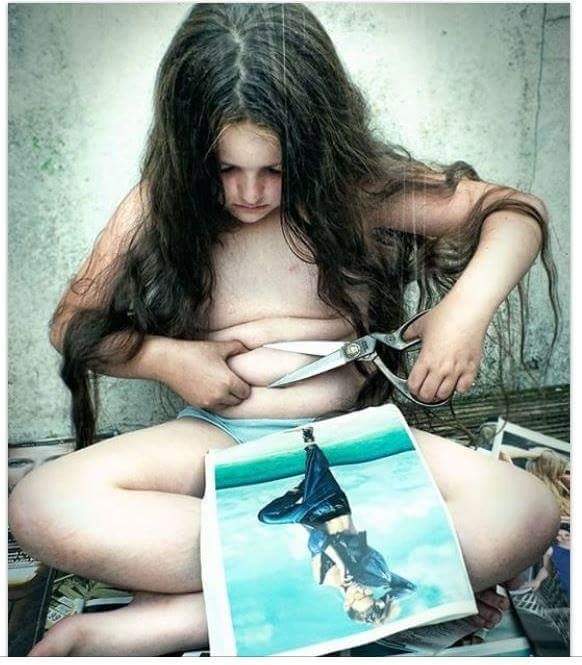
I don’t think that social media and the media’s portrayal of women and setting beauty standards cause eating disorders. I do believe however, that they’re not helping at all. I see it like this: If you already have a low immune system and go out in the cold and rain without clothes you’re more likely to become ill. It’s the same with eating disorders: if you’ve already got a low self-esteem and truly believe that, whatever and whoever you are is not enough, and you are then exposed over and over again to messages telling you to look this or that way, to be thinner, more toned, look younger and so on, you’re more susceptible to falling into the claws of anorexia et al than if you have a healthy self-esteem and are clear that those “beauty standards” are complete and utter rubbish.
I also believe that neither fast food nor crash diets or any other restricted diet for that matter are helpful or beneficial to a human’s mind, body and soul. An outlet that promotes sitting on uncomfortable chairs or in your car, scoffing 1000 kcal within less than 10 minutes is as damaging as suggesting to drink nothing but juices for 3 days and taking tablets to curb your appetite. The fast food chain and the multimillion company producing diet drinks and pills won’t hold your hand when you’re in hospital with a heart attack or being treated for malnutrition. They won’t give a tiny rat’s arse if you live or die. They’re not concerned what damage they do to your health. Your loved ones will. And, I bet, if there is an afterlife, you’ll be pretty hacked off with yourself for stupidly cutting your actual life short.
In one of my previous blogs I talk about individuality and being original. Given the fact that science proves that no one is the same as someone else, how can we then try and squeeze our bodies into one size fits all clothes and beauty standards? It just doesn’t work and it never will. This image is deeply hurtful and dangerous to the vulnerable amongst us. The build and shape or our body, the colour of our skin, our hair, our eyes, it’s all bespoke to our individual person and there is no one out there like it again. This is what we should celebrate and promote, because it’s so absurdly wonderful.

So it’s up to us to instil a healthy bit of self-esteem into ourselves, our children and our nearest and dearest. It doesn’t hurt to tell everyone once in a while how amazing they are, inside and out. Because, in the end, being loved for whoever you are with whatever body shape nature has gifted you with is the most empowering and healing thing we can do for one another. It may not erase eating disorders altogether, but it may be the road to embracing people for who they are and stopping people from taking drastic measures to fit an “ideal” that’s fabricated and absurd in equal measures.

References:

Blobel, B., 1989, Meine schöne Schwester, Bertelsmann Club, Güterslohe, Germany

Conte Corti,E. C., 2003, Elisabeth, Weltbild, Augsburg, Germany

Why imitation isn’t always flattery – copycats, plagiarists and other thieves

IMG-20180218-WA0003

Have you ever been a victim of fraud? Have you ever had your social media accounts hacked, someone pretending to be you, or a version of you? Have you ever had a fantastic idea at work, told your boss and they passed it off as their own, raking in all the glory? And you artists, has anyone ever copied your work? Be it credit card fraud or theft of mental property – ultimately the perpetrators had a ride at your expense. Your hard work – with one swoop they have taken it as their own. I have experienced both, being robbed of physical and mental property, and it has evoked a range of feelings in me, every time. Having grown up with morals and common decency, I am at a loss to understand why some people steal. Especially when it comes to copying someone’s creative work, I’ve asked myself and others:
Is imitation really flattery? Or is it just plagiarism and theft?

My first exposure to having creative work stolen was at primary school, when we were tasked to write a short story. I had always been a keen writer with a wild imagination and thrived on such projects. Upon completion and glancing over at my neighbour’s booklet I noticed that she had simply copied my idea and had even drawn a similar picture. I wasn’t flattered. I was upset. Too upset to confront her and angry that anyone would potentially think that she had been the one who had come up with the idea of the story, getting the praise that was supposed to be mine. Luckily our teacher knew my style of writing and had soon worked out who had copied from whom. But the damage was done and I never trusted the girl again. I also realised that I detested being copied, being fiercely protective of my authenticity and originality. The stories coming from my head were mine, yes, for others to enjoy but not to be passed off as theirs.
Fast forward a few years and I had a short-lived affair with being a copycat myself. There was this beautiful girl in my class at school and I wanted to be like her. So I got my mum to buy me clothes like hers and I tried to act like her, too. You can guess the result: Quite literally, the clothes and style somehow didn’t fit – I looked hideous and unnatural, like I was trying too hard. I quickly reverted back to being myself, continuing the search for my own style.
Having worked in an industry for many years where copying and replicating products and trends is common, you may think that I have become accustomed and immune to it, even approving of it. Fact is that I am not. What’s more, blatant imitation can get you very quickly into very sticky situations and ugly legal battles. This highlights that even the law acknowledges copyright and originality. But whereas multi-billion players in the market can battle such disputes out with more ease, the heartache and damage is far greater for individuals. During my research I heard of an artist who had his work stolen and saw it printed on t-shirts. Another conversation revealed someone’s research having been copied that took years to gather. And a friend of mine told me about his recent troubles with his new business into which, as you can guess, he poured his heart and soul. And then someone just copied it – down to the very fine details. He’s devastated. And at court. I hope he’s got a good solicitor.

It made me wonder: is there some underlying psychological reason for people to copy and imitate? What motivates someone to copy a creative property of someone else and shamelessly pass it off as their own? Is it to make up for shortcomings? Are they not happy with their own life and how they are?
Now, we’re all inspired by someone or something and use bits and pieces of the world around us. What we experience and learn then somehow churns out into our own creative work. And that’s ok and natural. What I have a real problem with is blatant copying without acknowledgement of the original source or trying to pass it off as your personal achievement. Yes, people have similar experiences but some things are just too alike to be a coincidence.   Whatever it is and whatever the thief’s reasons, it generates a mixture of feelings in me: frustration, pity and sadness. Frustration because, well, they have stolen from me, pity because they can’t come up with anything original themselves and feel the need to exploit others, and sadness because it somehow casts a shadow on my work and the beauty it held for me. I just can’t get my head around it. I have always been taught that stealing is wrong and university reiterates this: if you refer to or use someone else’s work then you must reference it, otherwise it’s plagiarism.

Why am I so passionate about this and so against stealing ideas? Let me tell you, it’s hard work being creative. It doesn’t just hit you every second of the day; you have to work on it, re-think it, re-work it, and sometimes throw the whole damn piece out the window. So when you do produce something it’s a huge achievement, something to be immensely proud of. When someone then just takes it and claims it as theirs, it feels like daylight robbery; only this time it’s not your hard-earned cash or precious jewellery. It’s your hard-earned mental property and your precious creative output, and the worst of all is, that having your brainchild kidnapped is a loss that no money in the world can replace.
So who are those thieves? Often they are total strangers and feel no attachment to you; hence it’s easy to steal from you. But sometimes they are known to us, which makes it really difficult, to both comprehend why a so-called friend would do this and to confront the offender. They have one thing in common though: they really don’t care about your feelings. It’s all about their gain. The common pattern is selfishness and having no scruple. They are phonies and frauds, quick to move on to their next heist, careless of what devastation they have caused. They are false and dishonest, just like ‘real’ thieves. However, just because you can’t easily call the police on those thieves, doesn’t mean their actions are justified.
During my adult years I have learnt one thing: the more I allowed myself to be me, to not try and copy someone else’s life, their opinions or style, the more liberated I felt and the more at ease I was. In return, I am drawn to and admire people who do their own thing. They inspire me to carry on doing my own thing, too, and to never be afraid to stand out from the crowd. I do what I like and what works for me, what makes my heart sing and what I am passionate about. Ultimately, it has taken me many years to become that brave, but I am now there and feel empowered. I certainly won’t let go or hand over my ideas and creativity for someone else to copy and claim it as their own.

So, to all those copycats out there, here’s my message to you: go and be original – isn’t it much more fun to create something to truly call your own? Before you just take someone else’s work and claim you came up with it, stop and reflect on your actions. What you’re doing is hurtful and pretty rank. Put simply: It stinks! And whilst we, the victims, can’t prosecute you (yet), remember that we can expose you, because, in the end, you’re not the original, just a cheap knock-off. Be brave: allow yourself to have your own ideas. Who knows – you may be surprised to find your own style, which, incidentally, requires much less effort and will come more naturally to you in the long-term. If you do draw inspiration from someone then tell them. Everyone likes to hear that they have inspired someone to do their own creative thing, without copying. That is flattery. And better yet, with your own ideas and originality, no one will dislike and distrust you for being a fraud.


Acknowledgements:

A huge thank you to everyone I spoke to in the last few weeks, about opening up about their experiences and contributing to examples in this blog.

Roleswap – #Timesup

Working Mother 1.jpg

On Monday morning I will go back to work. That’s nothing special, you think, but it will be for me. My 6 months of maternity leave have come to an end and I will step back into my career after caring for my children. Their father will be looking after them for the coming 6 months whilst I’ll be taking on the role of main breadwinner. We’re parents of the 21st century and have excitedly taken up the offer of Shared Parental Leave (SPL). Is time up for traditional gender roles? Are we slowly heading towards a truly equal society?

In recent months the news have been filled with articles about gender inequality, gender pay gaps, women’s marches and everybody who is somebody declaring that they are a feminist and support women’s rights and equal rights for both, women and men in every aspect of life. #TimesUp is trending strong, asking for equity and parity and inclusion for women and marginalised people. First of all, let me be clear that I am fully supporting this movement, which, in my eyes, has long been overdue. I’m a stickler for equal rights. I also believe in doing what you say and leading by example. So, when I was pregnant with my second child, my partner and I talked about leave from work and how I would love for him to experience what I did during maternity leave with our first (good and bad, believe me, I want him to experience it all). And suddenly we realised that, in fact, this was possible. SPL, which has been introduced in April 2015, became a realistic option for us. I could still breastfeed exclusively at the start but once the baby starts weaning at 6 months, and becomes less reliant on my boobs, my partner could take over. I asked myself: Is there a shift in how we divide parental responsibility and care for a family or are we still a marginalised exception in the UK? An article from The Independent provided sobering answers. It highlights that, one year after SPL became an option, only 1% of fathers have taken the opportunity to split care with the mother. What’s even more surprising is that a survey found 55% of women would not be prepared to give up part of their maternity leave (The Independent, 5th April 2016). So I started thinking of the reasons as to why this would be and whether SPL will have a future and become a normal part of a gender equal society or if it is a half-hearted attempt and empty symbolic offer to modern families in Britain.

The first thing that came to my mind was to ask if it’s natural to assume that the woman automatically assumes the role of the main caregiver for the foreseeable future and the man carries on as the breadwinner. I have to admit that there are certain limitations when it comes to gender equality concerning maternity or parental leave. A woman has to carry the child, give birth and breastfeed (if she chooses to). That’s how nature designed us and there’s not much we can do about that. And the sensible choice really is for new mothers to stay at home for the first few months, to regain their strength after birth, to breastfeed, to bond with the baby and, as I also found out, to talk to other new mothers. Motherhood with a newborn is truly stressful, not just on our bodies but also our minds and we definitely need time at home. Believe me, there is no way I would have felt ready, physically and mentally, to go back to work straight after I had given birth. Sore boobs, sore lady parts, raging hormones, severe sleep-deprivation and a tiny human permanently attached to my nipples would have made it impossible. Maternity leave is hard work, at every stage, no matter how long you take.
But there are just as many wonderful, magical bits in this first year and I loved getting to know my little baby. My partner missed some of these because he was at work and he was genuinely gutted.
At this point I started thinking about why fathers should have some more involvement and have the right to spend some time with their babies, too. Straight away, I stumbled across another obstacle, one that probably dictates to a lot of families who stays at home and gives up part of their career: money.  Maybe the mother works for a generous employer and gets full pay during maternity leave. Then it wouldn’t make much sense for the father to give up work for £140.98 a week. Most likely though the father is in a well-paid job and earns more than the woman already. Sadly, unequal pay for men and women and SPL are strongly linked and, as I had already suspected, a huge problem. It was also seen as the main stumbling point by Caroline Davies as she writes in an article in The Guardian: “For those mothers whose partner earns more, without an enhanced SPL allowance it makes little financial sense for them to sacrifice the more generous wage. Critics say this is where the UK has not been bold enough.” (5th April, 2015). Fact is, the financial situation will always dictate who stays at home and, potentially, who gives up their fulltime job to look after the kids. And in most cases, unless you’re really lucky and have grandparents looking after the children or can afford fulltime childcare, the mother will give up her career, at least for part of her life.

Now, before I carry on, please let me also say that I would never impose my own life choices onto anyone and claim they are the absolute right thing to do. But having talked to a lot of women and my female friends I was surprised to find that most would love to share some of the childcare with the father and get back into their career.
So let’s forget the monetary side for a moment. If a future system actively supported a greater involvement of fathers and encouraged mothers to go back to work and pursue a career, would we as mothers support this, too? Or would we try and keep the traditional maternity leave all to ourselves? “Of course, we deserve it!” I hear some of you cry! “We have done the hard work, sacrificed our bodies, our bodily functions, our sanity and then gone through excruciating labour, lost some more of our bodily functions and our dignity with it, then we breastfed and dealt with raw nipples and saggy belly, raging hormones and anxiety or postnatal depression and now someone is taking maternity leave away?” As mentioned before, maternity leave is very important, for mothers to recover and to bond with the babies; I’d always want to have some time with mine. However, when you look at it from a less emotional point of view, it’s not really the fathers’ fault that they can’t carry or birth their offspring. That’s nature. What, dare I claim, is against nature, is to assume that all fathers just want to be the main breadwinner because they are so historically. Well, history changes. Gay marriage was a big taboo and look where we are now. Thank goodness times are changing and maybe we should consider a change in caring for our babies and children if we have the opportunity and give fathers a chance. I’ve read lots of articles and reports in the last few months which highlight the importance of fathers and their input in their children’s lives, especially at a very young age. In Sweden, for example, where the government implemented a ‘use it or lose it’ structure, encouraging fathers to take their allocated parental leave time, “their parental leave resulted in “a closer relationship to their child”, and, according to Chronholm, it has also had “a positive effect on their partner’s possibilities for work or study”. One other benefit, it transpired, was that “it opened their eyes to how much time is actually needed to do daily housework”. As a result, 44% found it led to a more equal distribution of housework.” (The Guardian, 5th April 2015). I’d like to add that SPL could also eliminate the perception that maternity leave is one big holiday, having brushed off such comments many of times. Most importantly though, from personal experience, I have always found that a lot of 21st century fathers are and want to be actively involved in their children’s lives and will blissfully devote all their spare time to their children. Just because society and government tells them that the role of main caregiver is not theirs does not mean that they don’t want to be the main caregiver. Give them the chance and many will grab it with both hands. Many would love to spend half a year or even just a few weeks with their new baby and support their partner. If you had the chance, would you deny it to your partner? Think about it, after all the equal opportunities and rights talk, doesn’t this also apply to men and fathers? I believe that, if we truly want to live in a society thriving on equality we need to lead by example if we can, and that is exactly what I am doing, because it works for us as a family.
It’s not just that I feel the fathers and children are losing out. What about us women, our ambitions, developments and careers? All my female friends are super-intelligent powerhouses and I would despair if they weren’t able to contribute to the labour market anymore to their full potential, just because they have become mothers. Moreover, what kind of example does this set for our daughters? Forget a career if you want to be a mother? How discouraging and bleak.
Without gender equality on every scale, SPL will never be able to take off the way the government has possibly wanted. More has to be done to encourage women to go back to work, so we really can speak of an equal society, for both, women and men. The Guardian underlines this, pointing out the weaknesses of SPL: “The British government’s failure to propose a more forceful ‘use it or lose it’ structure, designed to create incentives and not just rights, means this well-intentioned effort to de-gender childcare rings hollow.”(5th April 2015).

Both, mothers and fathers are fabulous parents, each in their own right, both needed equally by their offspring. I fear, unless the financial discrepancies between men and women are fixed, SPL will remain a marginalised and half-hearted offer that only very few families can benefit from.  We must ask societies and governments alike to acknowledge and support this sooner rather than later by implementing systems for all-round equal opportunities so SPL can become a more realistic option for lots of families. After all, we’re in the 21st century now. #TimesUp for these obsolete rules which were imposed on us a long time ago. Here’s hoping that one day soon I am not a minority, and that my daughter will follow into my footsteps as a fully equal citizen of society.

References:

http://www.independent.co.uk/life-style/health-and-families/health-news/shared-parental-leave-survey-only-1-of-fathers-take-opportunity-to-split-time-off-a6969071.html

http://www.theguardian.com/lifeandstyle/2015/apr/04/shared-parental-leave-new-era-gender-equality-workplace

Love – and why we must never, ever give up on it

Love.jpg

When you listen to or read the news, most tell us about murder, corruption, sex scandals and assaults, violence and discrimination – in any part of the world. There are callous terror attacks, parents who lock up and abuse their own children, ex-partners publicise revenge porn, and leaders of states wield their power for their own gain, disregarding the needs of their country and people. Simply put: daily news are depressing, seemingly full of acts of hatred and loathing against society and other human beings. It scares me and makes me wonder what lies ahead of us and what my children have to deal with. The world seems void of love and kindness. Are we all doomed to a glum and dreary future?

Growing up I was raised in the belief that the world is a great place, the majority of people are good and that there is so much love in the world. I think I was very lucky – in materialistic terms my family doesn’t have much but there has always been an abundance of love around. I felt loved, with a childish and naïve belief that love is simple and everywhere.
Then I moved away from home and the bubble burst. Far away from home and exposed to lots of people I had never met before, immersed into a culture I wasn’t familiar with and some quite hilarious but significant misunderstandings due to the language barrier, I came to experience that life wasn’t all idyllic, rosy and about love. Life was tough. Life was about making a living, fending for yourself, and don’t get me started on relationships and falling in love. It was brutal! What seemed effortless and straightforward in fairy tales and romantic comedies was anything but in the cold reality of adult life. Perhaps, because I was a little bit gullible, I attracted some characters whose priority was “Number One” and I was a convenient enabler of their self-centred missions. They screwed me over, chewed me up and spat me back out, leaving me raw, wounded and deeply disappointed in life, relationships and love. I felt abandoned, stupid and exposed. It also made me somewhat desperate for belonging, for some acknowledgement and being loved. Eventually, after yet another rough ride and being let down repeatedly I was down and exhausted, unwilling to get back up and believe that love was out there. No one cared and love was dead. My life was a reflection of the news, and unlike the film, love wasn’t all around, in fact, love was all but absent. I had become cynical.
But then something great happened. When I least expected it, the universe gave me some people that selflessly cared for me, opened up their lives and gave me whatever I needed at the time: a home, a shoulder to cry on, evenings to drink and vent, nights to chat for hours, jokes to laugh at, and an environment for me to recover, and rediscover people, friendships, relationships and love. And whilst it took years to find the romantic love of my life, I came to the wonderful realisation that I was and had been all along surrounded by real love. In the harsh mess of life I just couldn’t see it.
See, the amazing thing about love is, apart from that it usually creeps up when you least expect it, that it exists in so many shapes and forms. You can love someone romantically, love your children, love a friend, love your family, love a hobby, a job, a country – you can love the whole world! There are no limits to how much and who you can love. There seems to be a never-ending abundance of love available to each and every one of us. The more love you give, the better you feel and the more you get back. It’s the opposite to spending money, and maybe, in the materialistic world we live in, that’s why it’s so difficult for us to be more loving and throw love around freely. We’re scared of losing something, giving away a part of us and getting short-changed. And sometimes we are. Sometimes we get dealt a rogue card and are in for a rough ride. Maybe you can tell similar stories to mine where you’ve felt lonely and abandoned or where you’ve been the outlet for someone’s despicable actions. You can recall moments when you didn’t believe in love anymore. Maybe you’re going through such a time at the moment. The world is against you, everyone you come across makes your life more difficult and unpleasant. It feels like a never-ending black tunnel, without a light in sight, not even a small emergency exit lamp. However, trying not to sound like the naïve girl from back then, I dare to exclaim that, as long as you carry love within you, it will find you. I am sure that, if you believe in love and don’t give up on it, it will overcome anything and win. I believe that, once you open yourself up to love, you will be surprised to see you’ll get it in some shape or form. Be it the love of a friend who stocks up your fridge before you get back from holiday, the love of your mother who checks in on you, the love of your neighbour who puts the bin out because you forgot, the love of an acquaintance who thought of you when he read that job advert – these little gestures are proof that, like a flower can break through the hard, cold surface of the asphalt, love will always make its way through hatred, violence, lies and pain. We just need to make it a priority and believe in it, even if it’s sometimes easier said than done.

So be love’s biggest fan. Be a “loveaholic”. Throw the stuff around like it’s going out of fashion. Love without fear. Love without boundaries. No matter what you believe in, where you are and at what point of your life you are – love reaches across nations, faiths and beliefs, genders and ages. You won’t need to learn anything new in order to show love. Only, you may find yourself surprised at how happy it makes you and how much you get back. Just imagine if everyone was like that – what would those news pages look like then?